Preserving Heritage and Nature through Green Belt Development
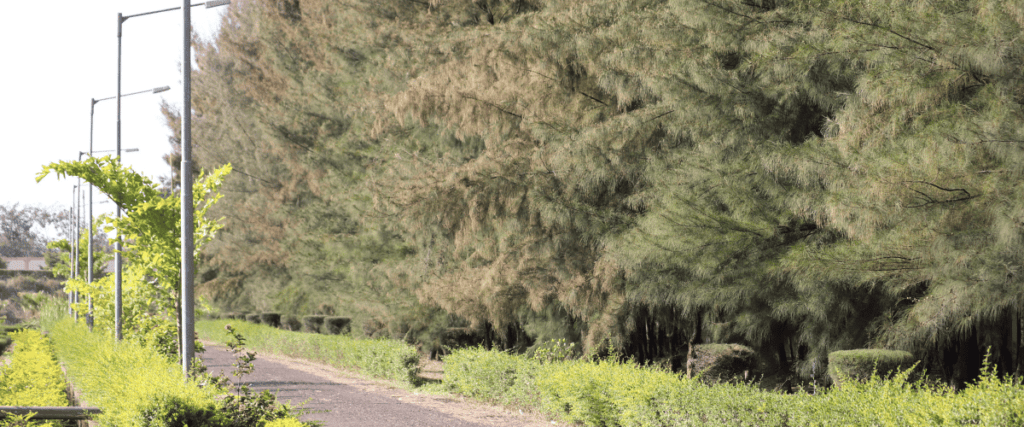
Industrial green belts, popularly known as industrial buffer zones or industrial green zones, refer to designated areas of land, set aside for industrial development while incorporating environmental protection measures ensuring sustainable development. Often, these green belts are intended to mitigate the potential negative impacts of industrial activities on surrounding communities and the natural environment. The philosophy behind such a recommendation is the plants’ ability to absorb pollutant gases from the environment just as they absorb other gases, viz., carbon dioxide and oxygen. The absorption of sulfur dioxide, fluorides, nitrogen oxides, etc. from the industrial environment, helps in cleaning the air and hence the utility of the green belt. The main objective of green belt development is to minimise the pollution load generated from different developmental activities. A green belt is generally proposed for an existing or new industrial activity to minimize the effect of different construction and operational activities on the surrounding environment.
- Promoting biodiversity and green havens
- Collaborating with communities and organizations
- Enhancing aesthetics and providing wildlife habitats
- Contributing to a healthier environment
- Increased greenery and community benefits
- Creating sustainable ecosystems for future generations
Call or Email Us For More Inquiry
Others Services
- Landscape Gardening
- Vertical or Wall Garden
- Butterfly Garden
- Kitchen Garden
- Terrace Garden
- Industrial Green Belt Development
- Cultural Forest Development
- Miyawaki Forest Plantation
- Afforestation & Ecosystem Restoration
- Orchard Development & Maintenance
- Tree Shifting (Transplantation)
- Plant Supply
- Lawn Supply & Laying
- Garden Maintenance
- Micro Irrigation Systems
- Gardening Consultancy
- Environmental & Ecological Consultancy