
Sustainable Reforestation: Building Thriving Miyawaki Forests
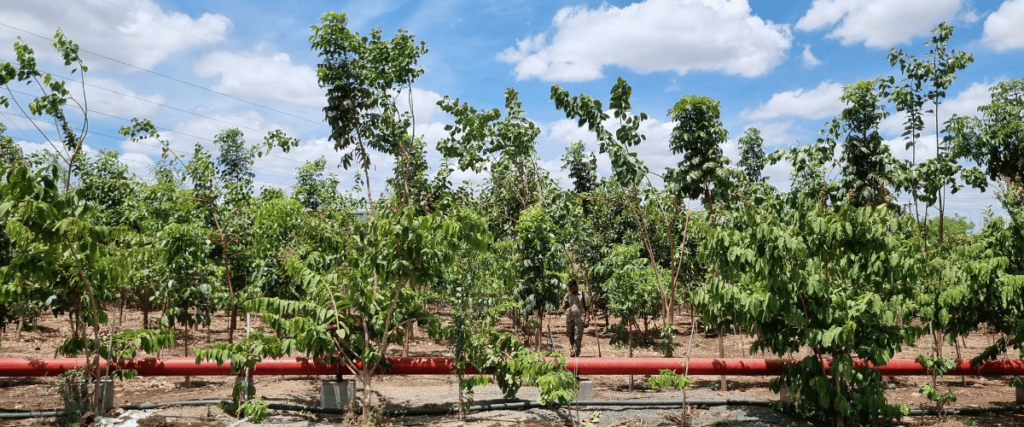
The Miyawaki forest plantation is an explicit way of ecological restoration afforestation developed by the Japanese botanist, Akira Miyawaki. The Miyawaki method mimics the way a forest would recolonise itself if humans stepped away. Only native species that would occur naturally in that area without humans, given the specific climate condition, are planted. Indigenous plant species have spent thousands of years adapting to their local environment to create a supporting ecosystem, so planting them doesn’t just reinstate this biodiversity – it builds a site that’s more responsive to climate change. You plant a diverse mixture of trees close together to maximise density and create balance. As the closely planted saplings must compete for light, which only shines on them from above, they shoot upwards very fast instead of sideways. The denseness of growth provides a greater amount of forage for pollinators and refuge for birds. More canopy cover, shades out weeds and creates a cool home for insects, plus the increased leaf litter builds fertility and life in the soil. Also, if you have a variety of tree species, you have others to step in if one succumbs to disease.
Miyawaki forests grow 10x faster, are 30 x denser and contain 100x more biodiversity. Since they’re quick to establish, maintenance free after the first two-to-three years, and can be created on sites as small as 3 sq. m, Miyawaki forests are viable solutions for cities looking to rapidly build climate resilience. This method in turn contributes to carbon sequestration, mitigating climate change, and creating green spaces that support wildlife habitat, improve air quality and provides numerous ecosystem services
Miyawaki forests grow 10x faster, are 30 x denser and contain 100x more biodiversity. Since they’re quick to establish, maintenance free after the first two-to-three years, and can be created on sites as small as 3 sq. m, Miyawaki forests are viable solutions for cities looking to rapidly build climate resilience. This method in turn contributes to carbon sequestration, mitigating climate change, and creating green spaces that support wildlife habitat, improve air quality and provides numerous ecosystem services
- Magic of rapid-regenerating Miyawaki forests
- Dense and biodiverse ecosystems
- Revitalizing degraded land
- Witnessing nature's resilience
- Sustainable reforestation efforts
- Creating thriving forests in small spaces
Call or Email Us For More Inquiry
Others Services
- Landscape Gardening
- Vertical or Wall Garden
- Butterfly Garden
- Kitchen Garden
- Terrace Garden
- Industrial Green Belt Development
- Cultural Forest Development
- Miyawaki Forest Plantation
- Afforestation & Ecosystem Restoration
- Orchard Development & Maintenance
- Tree Shifting (Transplantation)
- Plant Supply
- Lawn Supply & Laying
- Garden Maintenance
- Micro Irrigation Systems
- Gardening Consultancy
- Environmental & Ecological Consultancy